 |
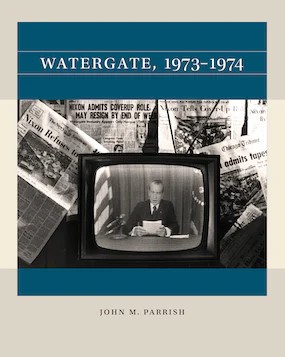
Play this game recently? | Would a pardon end or exacerbate the "long national nightmare" of Watergate? Washington DC, September 1974. Some of former president Richard Nixon’s secret White House tape recordings have gone public, proving he lied repeatedly and acted to cover up Watergate crimes. Thus, 30 days ago, in the biggest humiliation of his life, Nixon resigned - the only U.S. president ever to do so. Vice President Gerald Ford has stepped up to the presidency. Ford inherits difficult national problems (12% inflation, high unemployment, Vietnam war, Cold War, etc.) and an American public that is angry and distrustful of its political leaders. Ford has ideas for solving these problems, but it is hard to move forward with his policy agenda because there is a massive national focus on whether to continue investigating Watergate, to prosecute and possibly even convict and imprison Nixon. As president, Ford has the power to pardon Nixon. Would a pardon end the “long national nightmare” of Watergate and let America re-focus on governing? Or would a pardon anger the people, ruin Ford’s election chances in the 1976 presidential election, and create unequal justice for the many other Watergate participants not receiving a pardon? And should Nixon's White House tapes be made public? Students give speeches and engage in "soft diplomacy" to influence Ford's pardon decision and decide whether the tapes should be released to the public. |


Details
|
Using the Game |
Class Size and Scalability |
Reacting Consortium members can access all downloadable materials below. You will be asked to sign in before downloading. Please fill out the Permissions Request Form before using Pardon Me in your class! |
|
Kristin Casaletto
Kristin Casaletto is an artist and former professor of art and world humanities. Her artwork centers on socio-political challenges of 21st-century life in our superpower nation. Her work in civics outreach at the Gerald Ford Presidential Museum dovetails nicely with themes often found in her art: issues of conscience, the dangers of complacency, our successes and failures as a nation, the effects of history on the shape of society today, and the difficulty of truth. She holds a BFA in drawing, a BS in physics, an MA in art history, and an MFA in painting/printmaking. Find out more at her website. |
Diana SolomonDiana Solomon is Professor of English at Simon Fraser University. She is the author of Prologues and Epilogues of Restoration Theatre: Gender and Comedy, Performance and Print. She has also coedited three volumes: Women and Comedy: History, Theory, Practice; The Broadview Anthology of Restoration and Eighteenth-Century Drama, 2 edition, and Women's Literary Networks and Media Cultures in the Long Eighteenth Century. Recent articles have appeared in Aphra Behn Online, Eighteenth-Century Life, English Studies in Canada, and The Oxford History of Poetry in English. Her first exposure to Reacting to the Past was playing the role of George Danton in revolutionary France; although Danton lost the game (and an arm), she came away hooked on RttP. |
Members can contact game authors directly using the email(s) listed on the BLORG if they have questions about using the game. We also invite instructors join our Facebook Faculty Lounge, where you'll find a wonderful community eager to help and answer questions.
|
|